logo

University of Tehran (UT)

Iran’s Flagship Public Research University — the ‘Mother University’ of Iran

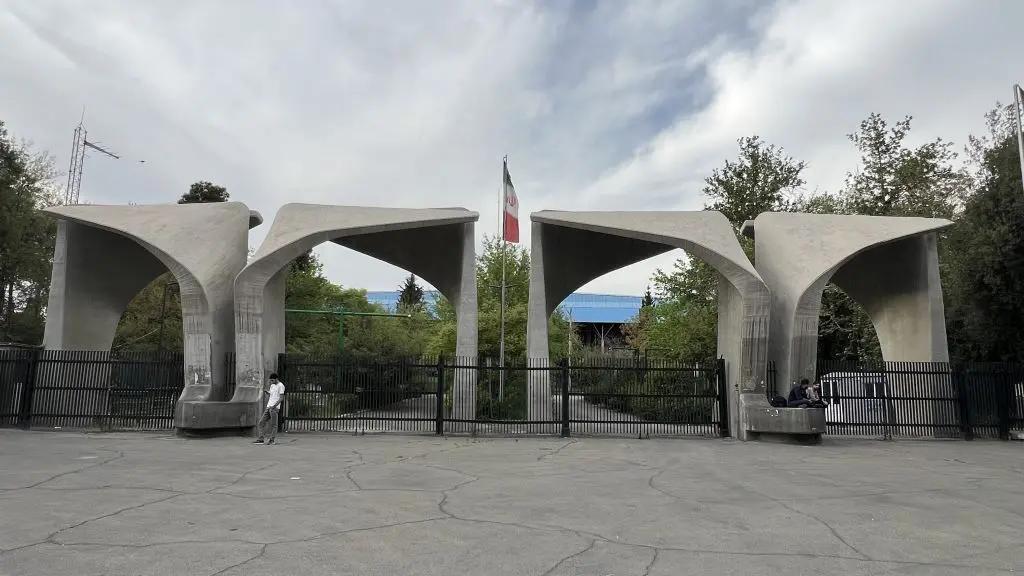
Main gate of the University of Tehran on Enqelab Avenue.

Introduction to the University of Tehran (UT)

Formally ratified in 1934 as Iran’s first modern university, the University of Tehran (UT) emerged from earlier higher-learning institutions such as the 19th-century Dar al-Funun (1851) and the Tehran School of Political Sciences (1899). Often referred to as the country’s ‘Mother University’, UT has shaped modern Iranian higher education, research, and public life for nearly a century; its medical schools were separated in 1986 to form Tehran University of Medical Sciences (TUMS).

UT’s main campus is in central Tehran along Enghelab Avenue (16th Azar St., near Enghelab Square), with additional colleges and campuses across Greater Tehran and beyond — including the Amirabad/North Kargar area, the College of Agriculture & Natural Resources in Karaj, the College of Aburaihan in Pakdasht (southeast of Tehran), and the Kish International Campus on Kish Island. This network provides access to extensive libraries, laboratories, museums, and innovation hubs across the capital and its region.

UT’s mission is to advance front-rank education and research while serving national development and global scholarship — cultivating ethical, innovative graduates; producing impactful science, technology, and humanities scholarship; and expanding international collaboration. This is reflected in university leadership’s emphasis on UT’s dual ‘academic and national’ missions and strategic initiatives such as the Science & Technology Park and the ‘City of Knowledge’ plan that channel research toward commercialization and societal impact.

Why Study at the University of Tehran?

Recognized Global Rankings:

UT is featured in major international rankings. It is ranked #322 in QS World University Rankings 2026 and is listed in Times Higher Education (THE) World University Rankings—assuring strong global visibility for your degree.

Breadth of Programs and Schools:

With numerous colleges, schools, and departments across engineering, sciences, humanities, social sciences, law, economics, and fine arts, UT offers extensive program choices and interdisciplinary opportunities.

Powerful Research Ecosystem:

UT supports research through dozens of institutes, research centers, and laboratories, enabling students to participate in impactful projects and collaborations with government, industry, and international partners.

English-Taught Graduate Options:

Several graduate programs and specialized courses are available in English. For Persian-taught programs, Farsi proficiency is required; for English-taught tracks, IELTS/TOEFL scores are generally needed.

Vibrant Campus Life and Facilities:

From the Central Library and Documentation Center to museums, sports facilities, and student societies, UT provides a rich academic and cultural environment in the heart of Tehran.

University of Tehran Rankings

The University of Tehran is consistently recognized in global rankings. It is ranked #322 in the QS World University Rankings 2026 and appears in the Times Higher Education World University Rankings. Subject-wise performance is particularly strong in engineering, technology, and the natural sciences.

Faculties and Academic Colleges

UT encompasses a wide spectrum of disciplines. Examples of major faculties and schools include:

  • Faculty of Electrical and Computer Engineering
  • Faculty of Mechanical Engineering
  • Faculty of Civil Engineering
  • Faculty of Chemical Engineering
  • Faculty of Social Sciences
  • Faculty of Literature and Humanities
  • Faculty of Law and Political Science
  • Faculty of Basic Sciences
  • Faculty of Medicine
  • Faculty of Dentistry
  • Faculty of Pharmacy
  • Faculty of Fine Arts
  • Faculty of Management
  • Faculty of Environmental Sciences
  • Faculty of New Technologies

Admission Requirements for International Students

Admission at the University of Tehran is competitive and handled by the relevant school/faculty and the Office of International Affairs. Requirements vary by level and program; the summary below reflects common expectations based on official guidance.

  • Academic Background and Eligibility:Undergraduate applicants should hold a secondary-school diploma and strong grades, particularly in relevant subjects. Graduate applicants must hold a recognized bachelor’s (for Master’s) or master’s (for PhD) degree with a competitive GPA. Some programs may require an entrance exam or interview.
  • Language Proficiency (Persian or English):For Persian-taught programs, Farsi proficiency is required (proof through recognized certificates or placement). For English-taught programs, valid IELTS/TOEFL (or equivalent) scores are generally required. Minimum scores vary by faculty.
  • Required Documents:Common documents include: passport copy, photo, academic transcripts and diplomas (with certified translation if needed), CV/resume, Statement of Purpose/Study Plan, and two Letters of Recommendation (for graduate programs). A medical fitness certificate and proof of financial ability may be required.
  • Application Review and Decision:Applications are reviewed by the faculty and international office. Shortlisted candidates may be invited for an interview (online or on campus). Decisions are communicated via the official portal or email.
  • Visa, Enrollment, and Registration:Admitted students proceed with student visa arrangements, insurance, and registration. IranEduCare can support you with the visa process, document verification, and accommodation planning in Tehran.

Important: Requirements and deadlines differ across faculties. Always verify specific details with the intended department and the university’s international admissions office.

Tuition Fees and Estimated Expenses

Tuition at the University of Tehran varies by faculty and level (Bachelor, Master & DVM, PhD). The table below shows per-semester fees in EUR as published for international students. Living costs (accommodation, food, transport) depend on lifestyle and housing type (on-campus/off-campus).

Field / DisciplineLevelOther Countries (EUR/semester)Iraq/Syria/Yemen/Lebanon/Palestine (EUR/semester)
Humanities, Social and Behavioral SciencesBachelor1500 EUR1000 EUR
Humanities, Social and Behavioral SciencesMaster & DVM1600 EUR1100 EUR
Humanities, Social and Behavioral SciencesPhD1700 EUR1200 EUR
Persian Language and LiteratureBachelor1050 EUR700 EUR
Persian Language and LiteratureMaster & DVM1120 EUR770 EUR
Persian Language and LiteraturePhD1190 EUR840 EUR
Arts, Engineering, Basic Sciences, Agriculture & Veterinary MedicineBachelor1800 EUR1200 EUR
Arts, Engineering, Basic Sciences, Agriculture & Veterinary MedicineMaster & DVM1900 EUR1300 EUR
Arts, Engineering, Basic Sciences, Agriculture & Veterinary MedicinePhD2000 EUR1400 EUR

Tuition fees are received in Euro and do not include accommodation, food, or insurance (per UT International).

The University reserves the right to change tuition fees; confirm with the relevant faculty.

For Afghan international students, tuition policies may follow self-governing campus rates; students with an Iranian residence permit may pay 80% of the international tuition (per UT notices).

All amounts in the table are published per semester (per term) and denominated in EUR.

For precise, up-to-date tuition details for your chosen program, please contact IranEduCare. We will confirm the current rates with the University of Tehran’s international admissions office.

Welfare Facilities & Student Life at the University of Tehran

The University of Tehran (UT) supports a lively student experience with large-scale housing, extensive libraries, sports and recreation, counseling and wellbeing services, and active student organizations across its campuses in central Tehran, Karaj, and Kish.

  • Student Dormitories:UT operates several main dormitory sites. The largest is the Kargar (North Kargar) complex, which hosts around 10,000 students (male/female; single/married) on a site of over 100 hectares, located close to the main campuses and daily amenities. Early requests are recommended due to demand.
  • Libraries & Study Resources:UT’s Central Library & Documentation Center is the largest academic library in Iran, offering broad print and digital collections and access to scientific databases, alongside faculty libraries across colleges.
  • Sports & Recreation:Students have access to UT sports facilities such as tennis and squash courts, football fields, gymnasiums, and swimming pools via the Faculty of Physical Education & Sport Sciences. The Kish International Campus also provides a well-equipped gym, fitness studio, and organized outdoor activities.
  • Health, Counseling & Well-being:UT’s Counseling Center provides mental-health support and was recognized nationally as Iran’s Outstanding Counseling Center (assessment year 2020). Many faculties also run local counseling offices for academic and personal support.
  • Student Clubs, Associations & Volunteerism:A wide range of student associations operate at college level (e.g., Architecture Students’ Association, scientific societies), plus campus-wide initiatives such as the UT Valiasr Charity Center—promoting volunteerism, cultural life, and peer networking.
  • Student Services Administration:Student services are coordinated by the Vice-President for Students (Students Service Organization) and the International Students Office, which support housing, visas, registration, and daily campus life.

Notable Alumni

The University of Tehran has educated generations of influential scholars, scientists, and artists.

  • Lotfi A. Zadeh: Computer scientist and founder of fuzzy logic; BSc in Electrical Engineering from UT.
  • Ali Javan: Physicist and co-inventor of the gas laser; undergraduate studies at UT.
  • Simin Daneshvar: Pioneer of modern Persian fiction and literary scholar at UT.
  • Abbas Kiarostami: Internationally acclaimed filmmaker; studied at UT’s Faculty of Fine Arts.
  • Parviz Tanavoli: Renowned sculptor and member of the Saqqakhaneh movement; educated at UT.

IranEduCare Support for Your University of Tehran Application

Applying to UT involves careful program selection, document preparation, and attention to language and visa steps. We streamline the process end-to-end for international applicants.

  • Program & Campus Matching:We map your academic background to suitable faculties and programs at UT (Tehran, Karaj, or Kish), including English-taught options where available.
  • Document & Application Build:We prepare and quality-check all required items (transcripts, translations, recommendations, résumé, research proposals for PhD), aligned with UT’s latest admissions checklists.
  • Language Pathways:Guidance on Persian (Farsi) preparation via UT’s Dehkhoda International Center for Persian Studies and on English-proficiency where programs require it.
  • Visa, Housing & Arrival:We coordinate with UT’s International Students Office for visa steps, dormitory requests (e.g., Kargar complex), and airport-to-campus onboarding so you settle in smoothly.

Frequently Asked Questions About Studying at the University of Tehran

Does UT provide dormitories for international students?

Yes. UT runs several dormitory sites; the largest is the Kargar (North Kargar) complex hosting ~10,000 students and located close to the main campuses.

What library resources will I have?

You’ll have access to the Central Library & Documentation Center—the largest academic library in Iran—with extensive print collections and major scientific databases, plus faculty libraries.

Are there sports facilities on or near campus?

Yes. Facilities include tennis and squash courts, football fields, gymnasiums, and a swimming pool via the Faculty of Physical Education & Sport Sciences. The Kish International Campus also offers a modern gym and organized fitness activities.

Is counseling or mental-health support available?

Yes. UT’s Counseling Center provides student counseling and has been recognized nationally; several faculties operate their own counseling units as well.

What is the main language of instruction? Can I study Persian at UT?

Most programs are taught in Persian (Farsi). International students can study Persian at UT’s Dehkhoda (International Center for Persian Studies). Some programs/courses are offered in English—check each faculty’s page.

Are scholarships available for international students?

UT offers competitive scholarships (including UT-Kish awards). Eligibility is merit-based with GPA and other criteria; only a portion of applicants receive awards. Always verify current calls and terms.

Who supports international students with admission and student services?

UT’s International Students Office (Admissions) and the Vice-President for Students (Students Service Organization) handle admissions, visas, dorms, and student welfare. IranEduCare coordinates with these offices on your behalf.